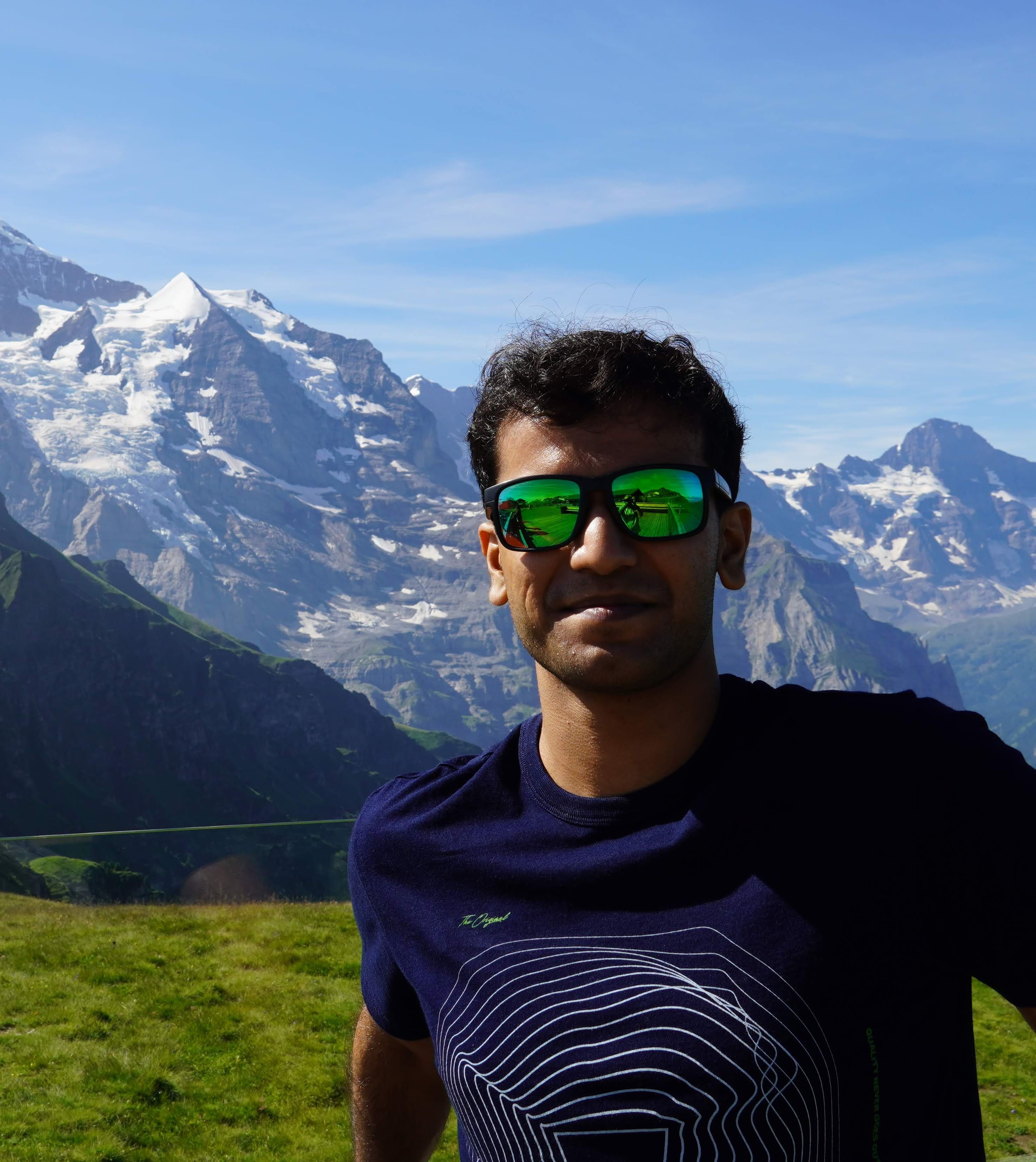
Hi, I am Aryan Nath. I hold a bachelor's degree in Computer Science from Ashoka University, India, and I will be pursuing a master's degree with a specialization in Cybersecurity at Aarhus University, Denmark, starting Fall 2026. I am interested in research on secure multi party computation, zkSNARKs, and applied machine learning. My undergraduate thesis is on designing and developing privacy-preserving age proofs for Aadhaar using the Falcon signature scheme. Other projects I am currently working on are focussed on authenticated private set intersection and post-quantum secure key management frameworks. Outside of academics, I swim competitively and enjoy playing the guitar.
Education
Ashoka University, India
B.Sc. (Honours) in Computer Science with a minor in Mathematics
Capstone Thesis: Privacy-preserving Age Proof for Aadhaar Using Falcon
Advisors: Prof. Mahavir Jhawar (Ashoka University), Prof. Saravanan Vijayakumaran (IIT Bombay)
News
February 2025
Finalist for Data Analysis Hackathon Organized by Harvard University
Our team was selected as one of the top 4 finalists for the data analysis track of the ICH Hackathon organized by Harvard University. We were the only student led team to qualify for the finals.
Publications
In: Mitra, S., Saha, S., Panigrahi, B.K., Sarkar, S., Chaudhury, S. (eds) Pattern Recognition and Machine Intelligence. PReMI 2025. 2026
An Explainable Deep-Clustering Approach to Assess Climate Vulnerability in India
Basu, S., Arora, F., Nath, A., Kumar, K., Dey, L.